
Shelving Systems For Depots

BACK TO BACK
The most economical and widely used shelf system for storage. Cross sections can be changed according to the load to be stacked. The most direct and fastest access is offered for pallets with a wide variety of products.

DRIVE IN SYSTEM
A system of shelving where products of the same type are stacked one after another. Crucially the stacked products are equivalent in weight and volume. The system where volume and height are used most efficiently. The first product in comes out last. (FILO)

DYNAMIC SHELF SYSTEMS
Working on the FIFO principle (First In, First Out), thanks to its braked rollers, the shunting speed on the tracks can be controlled. A system of shelving that works completely according to the law of gravity, it has no maintenance cost.
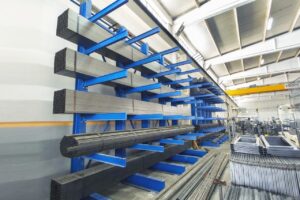
GARGAMEL SHELF SYSTEMS
Known to be the most efficient solution for stacking products of varying and oversized dimensions (eg sheets of wood, profiles, piping). With adjustable cantilevered struts, the system is analysed and then assembled according to the weight of the materials, ease of use, height of the material and the area to be covered.

MEZZANINE SHELF SYSTEMS
A multi-storey system of shelving where walking platforms are created between the shelves in order to maximise the height in warehouses accessed by workers. The platforms constructed between the shelves are made of wood, sheet iron or grid.

LIGHT LOAD WAREHOUSE SHELF SYSTEMS (MINI RACK)
Used to stack products with small volumes and light loads. Accessories may be added according to the products to be stacked, with product displays below and products on pallets stored overhead.

SHUTTLE SHELVING SYSTEMS
A system for pallets of the same size that requires no gaps for the stacking device. It can be used on projects where a rate 40 pallets per hour is sufficient. Both LIFO and FIFO configurations are possible.

AUTOMATED SYSTEM / RETRIEVAL SYSTEM
An automatic loading and unloading system that is the only alternative in warehouses with both high pallet entry-exit and product turnover. Stacker cranes move both horizontally and vertically along the rail corridor.